This is my foreword for our collaborative paper with the young people at the Crossroads detention facility. The Combine wants for them just as much, if not more than, what we want for our own children. Professionally, I want them to put me out of business and appreciate who their true “ops” are. We have met some young people at Crossroads who we will never forget. We see complicated humans, not bad-ass, hopeless kids. We see sometimes damaged, traumatized, but keenly aware beautiful young people being programmed out of their humanity by American life. The one thing I am certain of from our interactions with the kids in Crossroads is that many of them have the capacity to appreciate history and intellect, and many of them are keenly aware of what is going on around them socially and politically; they just don’t have a community that is preoccupied with their healthy development.
The media and many people love using the word senseless to describe violence when describing acts of violence committed by young Black and Hispanic kids. I am of the opinion that it is a mimicry of the nation-state. A nation-state driven by white nationalism and soaked in the blood of native indigenous people, enslaved people of African heritage, and Mexican people. Violence is the most important part of the American story. The American story cannot be told without violence. Violence and aggression have defined this very young country. Violence, genocide, and colonization were the means of obtaining the landmass. Violence and enslavement are what amassed the initial wealth. Violence was codified into the rule of law, i.e., slave codes, Jim Crow, the death penalty, Dred Scott, and the list goes on. American slavery was particularly brutal, and the brutality of it is one of the things that set America apart from its Western allies, who also built their nation-states on the riches of slavery. Violence permeated American life, from law enforcement and policy enforcement to entertainment. In modernity, no other country manufactures more firearms than America. No other country has dropped an atomic bomb. No other country incarcerates more people and youth than America. No other country has more victims of gun violence on a weekly basis. No other country has more mass shootings than America. No other country is in perpetual multiple wars. We should all get our popcorn ready for the planned UFC fight on the White House lawn. America is currently embracing an imperialist and colonialist view of the world, similar to the Monroe Doctrine- Iran, Greenland, Venezuela, blowing men out of the water in the Caribbean, where does it end? We are a few years removed from a majority of white people storming the capital in an insurrection and only months away from that white violence being removed from the history books through pardons, and we are a few weeks away from the most powerful court in the nation state violently taking away the voting rights of Black citizens.
As Jamil Al-Amin, aka H. Rap Brown, said, violence is as American as Cherry Pie.
Colonizing Europeans came with their religion, guns, and an insatiable colonizing spirit and appetite for violence and hypocrisy. While at the same time, they possessed an infectious desire to acquire by any means. Material goods, land, and property. The most prized possession included the African body, as well as a need to socially control all human interaction and ideas of critical thought and consciousness. The colonizers were manifesting their destiny while developing a social order and epistemology based on race and class, which they would ultimately use to alienate those they considered inferior and outside of the grace of their god and their concept of humanity. To achieve that social order, they were committed to repeated and sustained violence that had no bounds and no accountability. The violence wasn’t just casual; it was brutal and in every nook and cranny of American life. The Violence included torture, rape, sexual deviation, lynchings, and perversion.
The violence was inflicted on women, children, the elderly, and, of course, the most brutal displays of violence were reserved for Black men. The violence was used both as a system of control and as a means of producing free labor. The violence codified into the rule of law was systemic to American life and Black life. Black life differed from “American” life then as it does now for Black youth. Europeans were brutal to one another, but reserved their best violence for the African who was kidnapped and ripped from their land, customs, family, history, and heritage. There was no Black life in America without the constant fear or threat of white violence. The White American was proud of the scalping and genocide delivered to Native American people, and the lynchings and killings of Black people. The White American made their violence systemic through the rule of law, which became a vanguard for the violence that ripped apart Black families over and over again. Slave Laws, Black Codes, Slave Militias, Jim Crow, Red Summers and Lynchings, de facto segregation, redlining, sundown towns, White flight, Vagrant laws, COINTELPRO, etc, they all were anchored by actual and real violence. The violence was sanctioned by the rule of law. The rule of law became a vanguard for the violence against Black and Hispanic people. The rule of law turned a blind eye to the violence inflicted on Black and Hispanic people and their consciousness. Despite the violence, people somehow persevered spiritually and intellectually. Outnumbered, outsourced, and imprisoned on a vast expanse of land, people did their best to resist an oppressor committed to violence.
Although we persevered, we paid a heavy price. That price included an unimaginable level of generational trauma, spiritual damage, and psychological damage. The diabolical nature of whiteness used violence to then pulsate intellectual dishonesty and hypocrisy. The violence was used to weaponize white fragility and ignorance. That ignorance somehow convinced the world that Black people, Hispanic people, and migrant people are the sources of senseless and uncontrollable violence. The history books will show that people stuck in the American lexicon of ignorance, hypocrisy, and violence did everything they could to resist the violence and hate directed at their communities. There were not enough Nat Turners and too many people willing to join whiteness. However, Black and Hispanic kids are certainly not the violent, hopeless savages in American society with a propensity to be violent. They had no say in the marginalized communities they were raised in. No say in the under-resourced school system. No say in the drugs and guns that are more accessible in their community than books and social programs. However, that does not refute the false narrative that we are inundated with in the American media and information system.
The nation-state uses the media and information system to sustain this false narrative. Hollywood, the music industry, and the news media operate from the premise that Black and Hispanic kids are violent and are to be surveilled at all times when they are not entertaining us through sports and entertainment, and any of those kids exhibiting a rebellious or militant spirit deserve alienation, death, and incarceration. When describing violence in society, especially in Black and Hispanic communities or other communities outside of their own, White America always uses senseless to describe it and never provides context. In contrast, when describing violence committed by White kids in Black communities and in other non-white communities, and even violence in their own communities, White America never describes White violence as senseless. They talk of mental health issues or some unexplained phenomenon. They are almost never demonized-they fade out of the public’s eye and attention as an aberrational mirage.
Think of all the context used to describe January 6th, or the Unabomber, or Timothy McVeigh, or Kyle Rittenhouse, or the shooting in Buffalo, or some school shooting or other mass shooting committed by a young white male. Senseless in general is never used to describe White violence. That is partly because Whiteness has an unsaid right to violence, and White violence is beyond critique, whether it is done by the individual or the white nation-state. White violence is necessary for the maintenance of the order of the world. That order and epistemology of the world requires that the Black and Hispanic kid be the villain and beast.
“I hope they f–k you up,” yelled one woman, who identified herself as the victim’s cousin, at the alleged killer.
“Dead man… You’re going to jail, n____,” another man shouted at Davis while he was in the car.
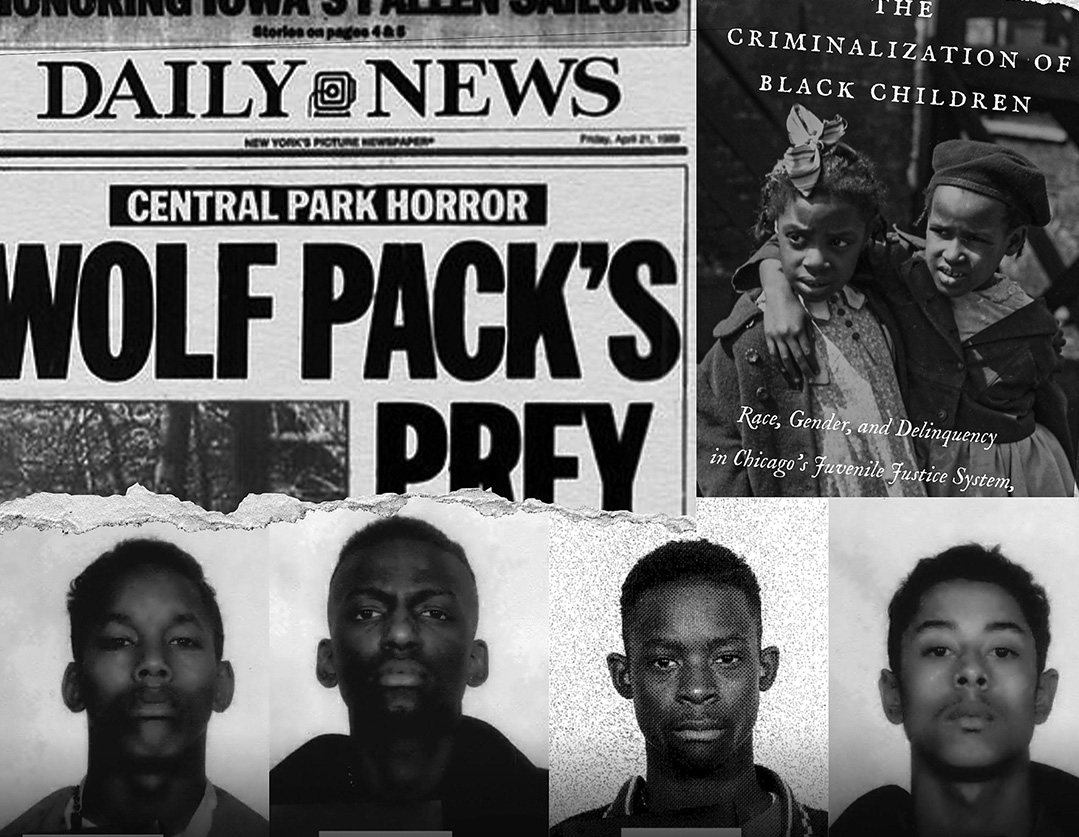
The above are quotes from an article reporting on an incident of Black-on-Black violence between children. The article describes the apprehension of an 18-year-old kid for his role in killing a 15-year-old kid, who he is alleged to have pistol-whipped at the delight of hundreds of other kids during a water fight in Queens. This was the latest Black kid violence porn that floods the news cycle and social media in one of the biggest cities in the world. The viral video showed dozens of kids watching and videotaping the altercation and subsequent death for the world, and of course, law enforcement and the media to see and eventually report on in this dystopian techno-feudal digital age. The local New York papers, from the New York Times to the New York Post, are not reporting or providing intelligence discourse as to why this violence continues to happen; they are simply producing advertisements for Black death, pain, and suffering. They never discuss the underlying systemic causes and phenomena. They never discuss the historical and modern-day policies that created these conditions.
America waged war on Black and Hispanic communities. Those politicians, so-called community leaders, and the community at large have, for the most part, totally forgotten that. In the secluded and private rooms where policies and decisions are made about unemployment, poverty, housing, health, and education, concerning the neighborhoods where these kids die and survive, and all the issues that affect these kids and their families, they rarely have true representation. Those in the room often are a part of the problem and are comfortably complicit in the spiritual and physical death of the kids in those communities.
Many are distracted from the war by the good fortune of a small percentage of lucky Black and Hispanic people who are far removed from where the problems lie. The community is distracted by sports, entertainment, influencers, politicians, grifters, capitalists, and the famous for all the wrong reasons. The community has been ruptured. That’s why these deaths are on repeat with no end in sight. To think that this system is going to heal these children and their communities is actually senseless. The anger described by those family members above won’t be a catalyst for people to look at what’s happening culturally in real time to Black and Hispanic kids and, by extension, the community. It will just be misdirected anger, anger with no guidance, anger that will add to the stockpile of generational trauma. From a capitalistic standpoint, it will be clickbait for White America and the system of whiteness, utilized to justify White Violence and the system of whiteness as the only response to a deep, complicated problem that began with White aggression and violence towards Black and Hispanic people. Politicians and government officials will continue to hold press conferences and provide more budgets for policing, and more press conferences for show and tell to let the public know that the social contract is still intact, “we have the dangerous kids of color people”.
At this point, the violence, the celebration, and the commodification of Black and Hispanic violence and suffering are American currency and not senseless at all. It is quite understandable in a society structured around anti-blackness. The evidence is staring us in the face every day as we doomscroll, watch the news, and are entertained. As a community, instead of amputating the foot that has gangrene, we would rather let the disease spread. Cutting it off means educating our children not just academically but also culturally, outside the organized education mandated by the nation-state and the entertainment complex. Cutting it off means disengaging from popular culture. Our liberation is not through entertainment and popular culture. The diabolical nature of white violence and whiteness as a system invites lazy thinking and observations that fail at solutions. Their solutions become the community’s problem. If you cannot discern, you cannot come up with practical solutions, and that simply reinforces the cycle of fear and hopelessness that white violence instilled in many of us, and most importantly, the children.
I have been a capital, federal, and state criminal defense attorney and law school professor since 2001, and prior to that, I was a prosecutor in the Brooklyn District Attorney’s office. Prior to that, I was one of those kids who had survived one of the most violent periods in NYC. I was a high school student from 1986 to 1990. Numerous friends died, and numerous friends went to jail. Drugs and violence flooded our communities along with HIV and other social ills. I actually went to public school at P.S. 327, which is one block away from Crossroads on Bristol Street. After 24 years, I resigned from teaching trial advocacy at Fordham Law School. Teaching is spiritual in my experience, and I love trial advocacy, but I no longer look forward to teaching law students who are not inquisitive about the world or trial advocacy. The children at Crossroads are still inquisitive about the world. My interactions with the kids at Crossroads is time better spent, as I see some of the best and brightest that our community has to offer at the doorway of the American Industrial Prison complex.
Many of the kids at Crossroads are radicalized by American violence and traumatized by their traumas and epigenetics. They are captured by the spirit of gang life and street rules. They don’t realize who their real ops are; they think their ops look like them. The more exchanges we have with them, the more clarity we all have. Our discussions include discussions about history, social phenomena, and critical thinking. In our exchanges, they begin to understand why they are angry and hopeless, and to identify the risk factors in their home and neighborhood. They begin to understand that these entertainers and the corporations they are beholden to are the real ops. They also begin to understand how those risk factors came into their homes and neighborhoods. We hope to facilitate truth and critical thought so they can continue to discern the real ops. Some of these kids will be home in the near future, and others will grow up in prison. They will need all of the critical thinking skills and discernment that they can muster. Hopefully, the time spent with them aids and solicits a pathway to knowledge. We have an obligation to the kids; we were once them. That obligation requires us to be intentional and rely on truth and history in those moments we have with them.
They owe us nothing. Someone owes them an explanation as to why America is so violent, though. Someone owes them an explanation about the history of white violence and American racism, though. Someone needs to tell them about the execution of George Stinney, the Supreme Court case Miller v. Alabama, and the Roper decision that most, even in the legal community, are unaware of. Someone needs to explain the science and data concerning youth criminality to them.
Immaturity, Susceptibility, Salvageability, and Dependence are the four main factors to consider when addressing youth criminality.
Adolescent immaturity is the first hallmark of adolescence to consider in youth criminality. We see this component in every single hall at Crossroads. A lack of maturity and an underdeveloped sense of responsibility are more common among youth than among adults and are more readily understandable to youth. These qualities often lead to impetuous, ill-considered actions and decisions. That is undoubtedly evident in the conduct of 99% of the kids in Crossroads. Neuroscience and psychology have provided a more refined explanation for this phenomenon. The prevailing neuroscientific explanation for adolescents’ immaturity begins with the fact that “[t]he frontal lobes, home to key components of the neural circuitry underlying ‘executive functions’ such as planning, working memory, and impulse control, are among the last areas of the brain to mature; they may not be fully developed until halfway through the third decade of life.” Children’s brains have a proliferation of neural connections. Then, beginning around age 11 to 12, rarely used connections are selectively pruned, making the brain more efficient. This increase in efficiency progresses from the back to the front of the brain; evidence suggests that, in the prefrontal cortex, the area responsible for executive functions, the process is not complete until the early 20s or later. Given this understanding of the adolescent brain, scholars have begun to speak less of adolescents’ outright “immaturity” and more of a “maturity gap.” They point out that the back-to-front process of neural pruning leads to two overarching sets of cognitive “systems” developing on different schedules.
The Supreme Court noted in Roper that a second “area of difference between juveniles and adults is that juveniles are more vulnerable or susceptible to negative influences and outside pressures, including peer pressure.” We again see that in every hall of Crossroads, whether it’s the dynamics of power in the house or how, in every single house, drill music is blasting through the television. We see that in gang culture and the culture and history of neighborhood beefs that existed before many of these kids were even born.
A large body of research shows that this susceptibility is a transitory, age-linked phenomenon. The studies, however, do not include the effect of this digital and social media age, nor the impact of a culture of violence promoted as a viable framework through lifestyle and entertainment along racial lines. So many of the youth cases in the Youth Parts across New York City involve gang activity, with the discovery, which includes music videos and social media containing the remnants of gang and street culture. Such culture is defined by the proliferation of guns and is promoted and marketed by major corporations as entertainment that the kids emulate. Not only are young men and women susceptible to each other and peer pressure, but they are also susceptible to popular culture, which is embedded with violence and gang culture.
This is not hyperbole either; one just has to browse YouTube, social media, and popular culture to see the influence of mainstream artists who represent gang culture, or visit the Halls at crossroads and see what young people are watching and listening to. Just this summer, Snoop Dogg, a devout Crip gang member, was paid handsomely to be a representative at the Summer Olympics in Paris. During the last election cycle, then presidential candidate Donald Trump campaigned in Crotona Park in the Bronx, and during the campaign trail brought out to the stage two rappers by the name of Sleepy Hollow and Sheff G. At the time, both of these young men were courted by a presidential candidate; they were also devout gang members indicted in Brooklyn Supreme Court.
Millions of impressionable kids in both rural and urban areas are susceptible to American cowboy culture in all shapes and sizes. However, the kids in Crossroads are the low-hanging fruit for this American system driven by violence. They are cultivated by American content. The same American content that influences teenagers in Brooklyn convinces Kyle Rittenhouse to travel across state lines with an AR rifle purchased by his own mother to eventually kill lawful protestors, or a 1st grader shooting his teacher in Virginia, or the radicalized youth writing manifestos before they shoot up churches, supermarkets, and schools. The children who commit these acts of violence are susceptible and vulnerable in a country where violence has become entertainment. However, the kids in Crossroads don’t yet understand that they are the victims of violence; they wrongly think they are gangsters.
The Supreme Court has noted that a “third broad difference between juveniles and adults is that the character of a juvenile is not as well formed as that of an adult. The personality traits of juveniles are more transitory and less fixed. This “struggle to define their identity” decreases the likelihood that even a heinous crime committed by a juvenile is evidence of irretrievably depraved character.” Respected social science studies support this conclusion. Adolescents are overrepresented statistically in virtually every category of reckless behavior. This includes crime. Based on rigorous self-report studies, entirely refraining from crime during adolescence is statistically aberrant. On the other hand, the vast majority of adolescents who engage in criminal or delinquent behavior desist from crime as they mature. Most of these kids in Crossroads are sharp and very observant, regardless of their intellectual capacity. They are the type of kids who could do anything if they had proper support and grew up around protective systems rather than systems of exploitation. As the staff at Crossroads can attest, despite the publicity of the crimes and the crimes themselves, these are just kids still developing.
Finally, the Supreme Court has explained that adolescent offenders are less culpable because they have depended on others for most or all of their lives. Even this conservative American Supreme Court recognizes that, relative to adults’ crimes, adolescents’ crimes are less a product of their choices and more a product of their environment. The overwhelming majority of the kids in Crossroads come from environments defined by deprivation and a lack of resources, where the legacy of white violence and capitalism makes it easier to purchase a gun than get a job or a library card. The kids have less control or less experience in controlling their own environment.
The kids in Crossroads can’t simply levitate themselves and extricate themselves from their criminogenic environments. They return to the same environment where going to school, or the probation office, is often the catalyst for another violent act waiting to happen.
Not enough people in the community or legal profession have read Dr. Amos Wilson, so most have no idea how to tell these kids that they are really just acting at the behest of white violence and white systems and that they are cogs in the doorway to mass incarceration.
It will be a good day when the kids are totally disinterested in the entertainment and pop culture content-based industry that America has to offer them.
It will be a revolutionary day when they figure out who the op is. It will be a transformative day when they begin to peel back the self-hatred and anger that have radicalized them.
Image Source: https://pixabay.com/en/football-american-college-game-888015/